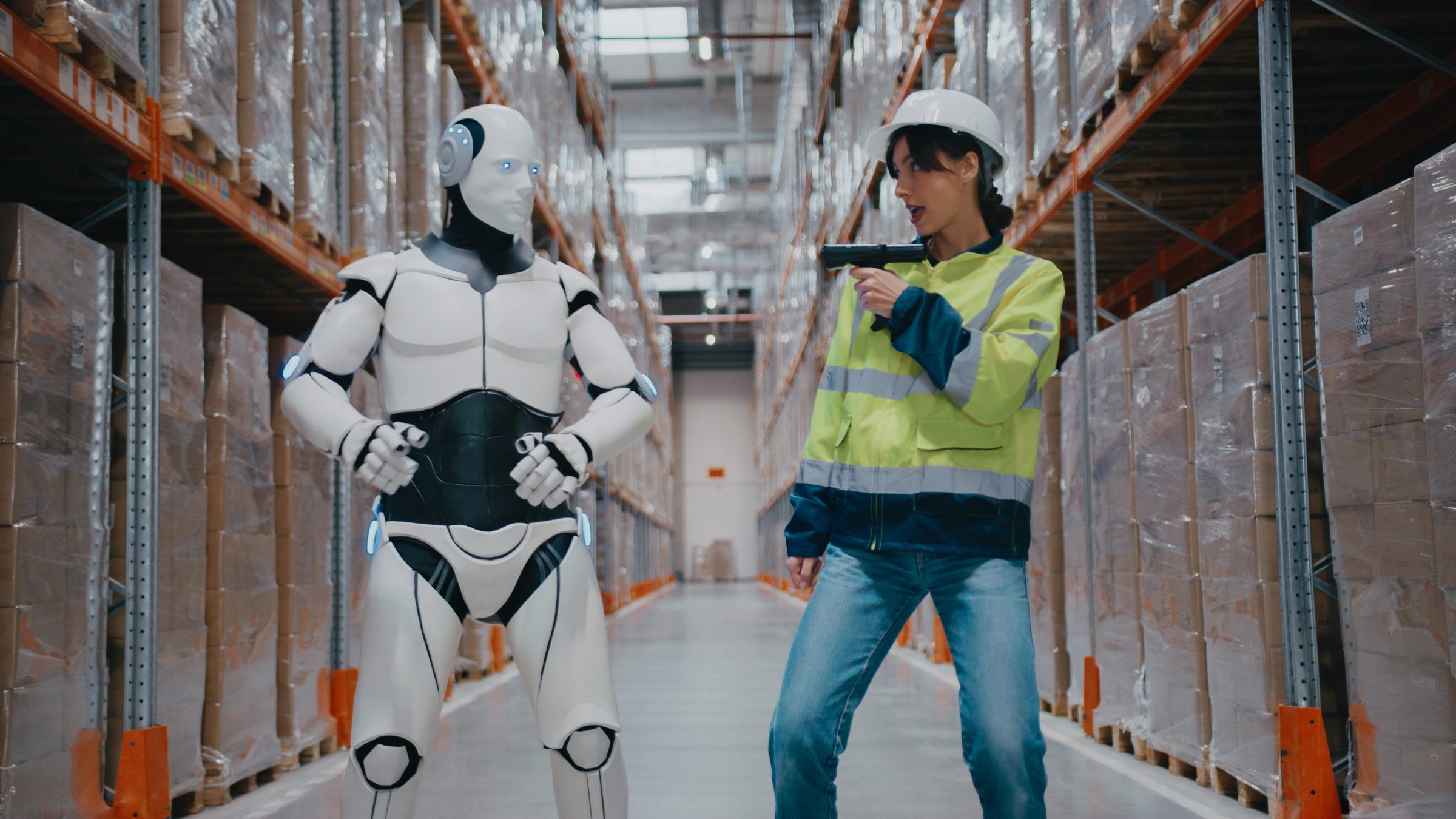
Britain’s Health and Safety Executive has announced a landmark initiative to develop the UK’s first regulatory safety guidance for collaborative robots — known as cobots — that work alongside humans on the factory floor.
Launched at London Tech Week on 10 June 2026, the project brings together the HSE, Automate UK (the UK’s trade body for robotics and automation), the Manufacturing Technology Centre (MTC), and the Regulatory Innovation Office to create practical, compliance-grade guidance on how cobots can be safely deployed in workplaces.
The problem: safety uncertainty is stalling automation
The initiative comes in response to a well-documented barrier to the adoption of robotics in UK manufacturing: regulatory uncertainty. Industry estimates suggest that between 15 and 20 per cent of automation enquiries stall due to safety uncertainty — particularly around cobots, where the boundary between human and machine work is deliberately blurred.
Unlike traditional industrial robots, which operate behind physical barriers away from human workers, cobots are designed to work in close proximity to people — passing tools, assisting with assembly, or operating on shared production lines. That proximity raises distinct safety questions that existing guidance has not adequately addressed. The absence of clear regulatory guidance has meant that even businesses that want to adopt cobots have been reluctant to proceed without certainty that their implementation will meet legal safety requirements.
What the guidance will cover
The project will proceed in two stages. The first, launching this summer, will focus on delivering regulatory clarity for cobots — helping businesses understand how existing health and safety requirements apply to cobot deployments, and providing industry-tested practical guidance on how compliance can be demonstrated.
The second stage will turn to more complex territory: applications where AI is embedded in robotic systems, creating new safety questions around machine learning, adaptive behaviour, and automated decision-making in physical environments. That stage will explore how tools such as synthetic testing can help regulators and industry safely accelerate the adoption of AI-powered robots.
Why this matters beyond the UK
Cobot adoption is growing rapidly across Australian manufacturing, logistics, warehousing, and food production sectors. Many of the same regulatory uncertainty barriers identified in the UK are present in Australia, where WHS guidance on collaborative robotics is similarly underdeveloped. With NSW having already passed the Digital Work Systems Act 2026 — which explicitly extends WHS obligations to AI and automated systems — regulatory guidance on safe implementation has become a pressing practical need.
The key message from the HSE initiative is that the goal is not to restrict the use of robots or cobots, but to remove the uncertainty that has prevented their wider adoption. Clear, practical safety guidance should accelerate deployment, not slow it down. Further information is available from the HSE Media Centre.