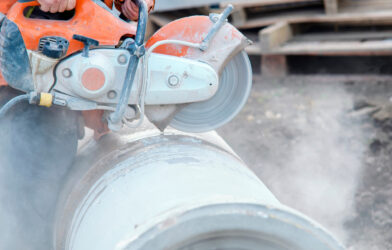
The ACT has implemented a jurisdiction-specific WHS Code of Practice addressing extreme temperature risks, acknowledging that climate change is driving more frequent, longer-lasting and severe heatwaves that pose growing workplace dangers.
The document emphasises that Australia’s weather forecasting typically provides several days’ warning of extreme heat and heatwaves, allowing employers to prepare preventative measures for workers in advance.
Spanning 42 pages, the Code provides guidance on recognising extreme temperature hazards—both hot and cold—evaluating associated risks, and addressing them using control hierarchy principles.
A dedicated construction industry section requires PCBUs to work with employees to determine specific temperature-related scenarios where risk becomes unacceptable and operations must cease to eliminate danger.
“For building and construction, the work stoppage threshold should account for forecast temperatures exceeding 37 degrees, given the potentially fatal consequences of working in extreme heat,” the Code states.
Between 35 and 37 degrees, if heat stress remains likely despite implemented controls, workers must relocate to unaffected areas where protective measures can keep risks minimal while work continues, according to the document.
“Should relocation prove impossible, workers must move to air-conditioned site facilities until conditions allow safe work resumption,” it adds.
ACT Skills, Training and Industrial Relations Minister Michael Pettersson approved the new Code as the Australian Council of Trade Unions released research advocating for mandatory heat stress protocols in WHS legislation to address climate warming (see related article).
NSW workers’ comp changes expand cancer coverage while tightening volunteer access
New South Wales has tabled legislation broadening the presumptive cancer list for firefighter compensation whilst imposing stricter requirements for volunteer firefighters’ eligibility.
If enacted, the Bill will incorporate primary site pancreatic cancer (requiring 10 years’ firefighting service), thyroid cancer (10 years), cervical cancer (10 years), ovarian cancer (10 years), uterine cancer (10 years), vaginal cancer (10 years), vulval cancer (10 years), penile cancer (15 years), lung cancer (15 years) and skin cancer (15 years) into Schedule 4 (“Firefighters’ diseases”) of the Workers Compensation Act 1987.
The State Opposition presented comparable legislation in August—now before the Legislative Assembly—criticising the Government’s delayed response compared to other Australian states that have already strengthened firefighters’ presumptive compensation entitlements (see related article).
The Government’s Bill diverges from the Opposition’s by including vaginal and vulval cancers whilst excluding malignant mesothelioma; maintaining the existing qualifying period for primary site oesophageal cancer (already in Schedule 4); and requiring volunteers to demonstrate occupational hazard exposure comparable to career firefighters for newly listed diseases.
A newly established advisory panel will assess volunteer firefighter eligibility.
These variations explain why the Government projects its reforms will cost the compensation scheme approximately $53.3 million through 2028-29, versus an estimated $211 million for the Opposition’s proposal, according to the public interest statement.
NSW Emergency Services Minister Jihad Dib and Industrial Relations Minister Sophie Cotsis jointly announced the Bill will align the State with other jurisdictions whilst establishing New South Wales as the first to recognise vulval and vaginal cancers as presumptive conditions for firefighters.
Dib noted the presumptive system provides firefighters diagnosed with listed cancers rapid, streamlined access to compensation benefits.
Workers Compensation Legislation Amendment (Firefighters) Bill 2025
Explanatory note
NT WorkSafe analyses refuelling incident factors
NT WorkSafe has identified potential contributing elements behind two recent Northern Territory incidents where two workers suffered severe burns.
Both October events—one in Darwin, another in Coomalie Shire—involved workers using jerry cans to refuel pressure washers when petrol caught fire, according to the regulator’s safety alert.
Possible causes included: insufficient cooling time for pressure washer engines before refuelling; petrol splashing onto hot engine components; difficult jerry can handling leading to spillage; and water application to flames.
“Water use would have spread the burning fuel, intensifying the fire,” the alert states.
The document proceeds to detail preventative actions duty holders should implement to avoid similar incidents.