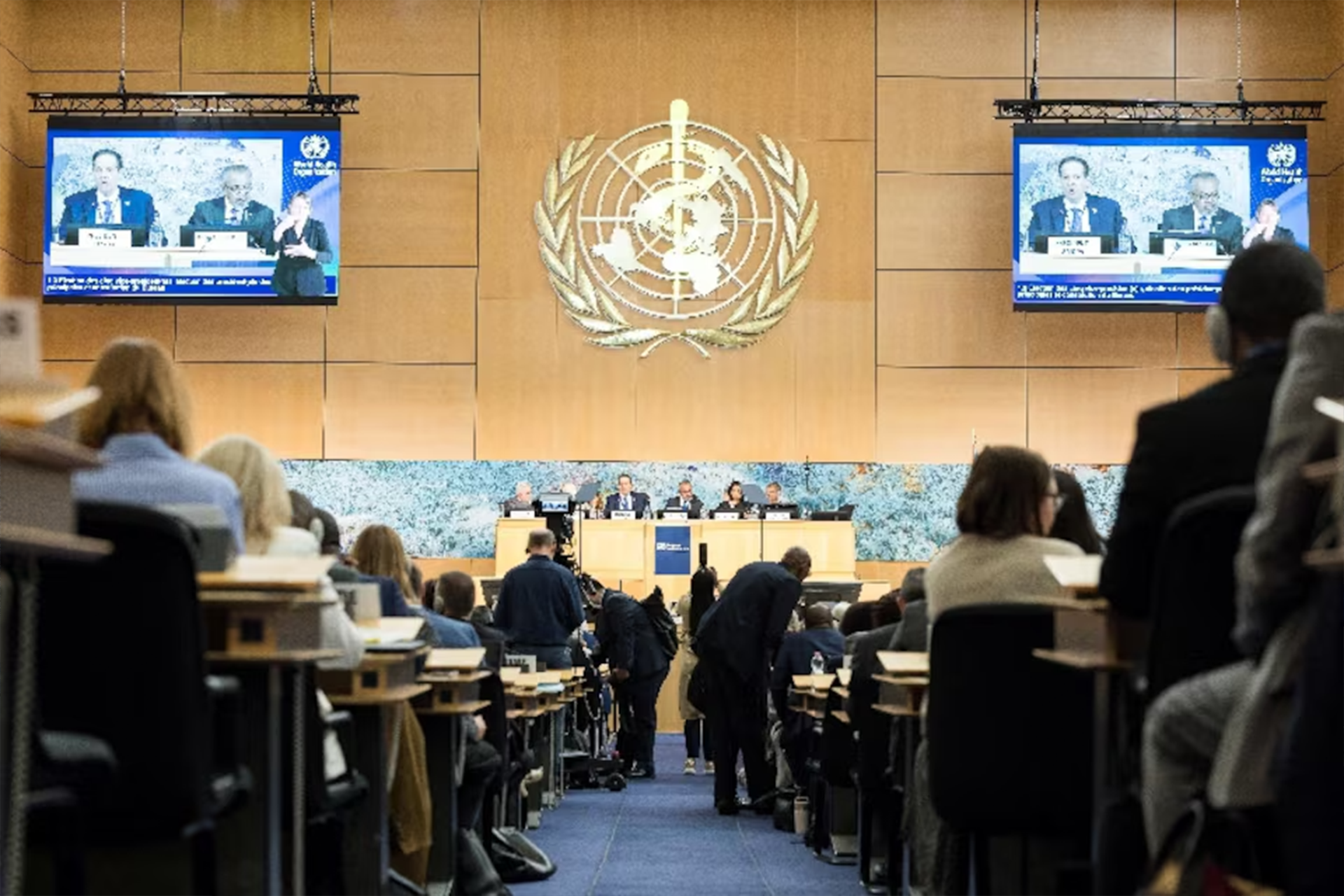
Senior leaders of national and global occupational health and safety organisations are calling on the World Health Organization to place worker safety at the centre of its strategic agenda — warning that the agency has allowed occupational health to fall off the global health policy map at precisely the moment new risks are accelerating.
The call comes as the 79th World Health Assembly convenes in Geneva from 18 to 23 May 2026, bringing together delegations from all WHO member states to set global health priorities and approve budgets. The Global Occupational Safety and Health coalition has issued a position paper urging delegates to ensure occupational health and safety is embedded in the WHO’s strategic plans, noting that work-related illnesses, injuries and deaths cost the equivalent of nearly six per cent of global GDP — up to $3 trillion annually.
The coalition has warned that the WHO is ignoring occupational health and safety as climate change, emerging pandemics and migration expose workers to entirely new categories of risk. Heat stress, in particular, has been flagged as an escalating crisis — with researchers noting that extreme heat impairs cognitive function, increases incident rates, and is linked to workplace violence, falls, and errors with powered tools.
The WHO did not respond to multiple requests for comment about why occupational health had been deprioritised. In its 2026–2027 budget, the agency cited a $700 million decrease in core program funding as a reason for reduced scope — a cut directly linked to the withdrawal of the United States as the WHO’s largest national donor.
For Australian employers and WHS practitioners, the global debate has direct relevance. Australia’s approach to occupational health sits within an international framework of standards, research and policy that flows from the ILO and WHO. Reduced investment in global occupational health infrastructure weakens the evidence base that informs national standards, codes of practice and risk assessment tools.
Safe Work Australia and Australian state regulators continue to track global developments in occupational health research, including climate-related risks, AI and digital work systems, and emerging chemical exposures. WHS professionals are encouraged to engage with international resources through the ILO and to monitor developments from the 79th World Health Assembly as they emerge.