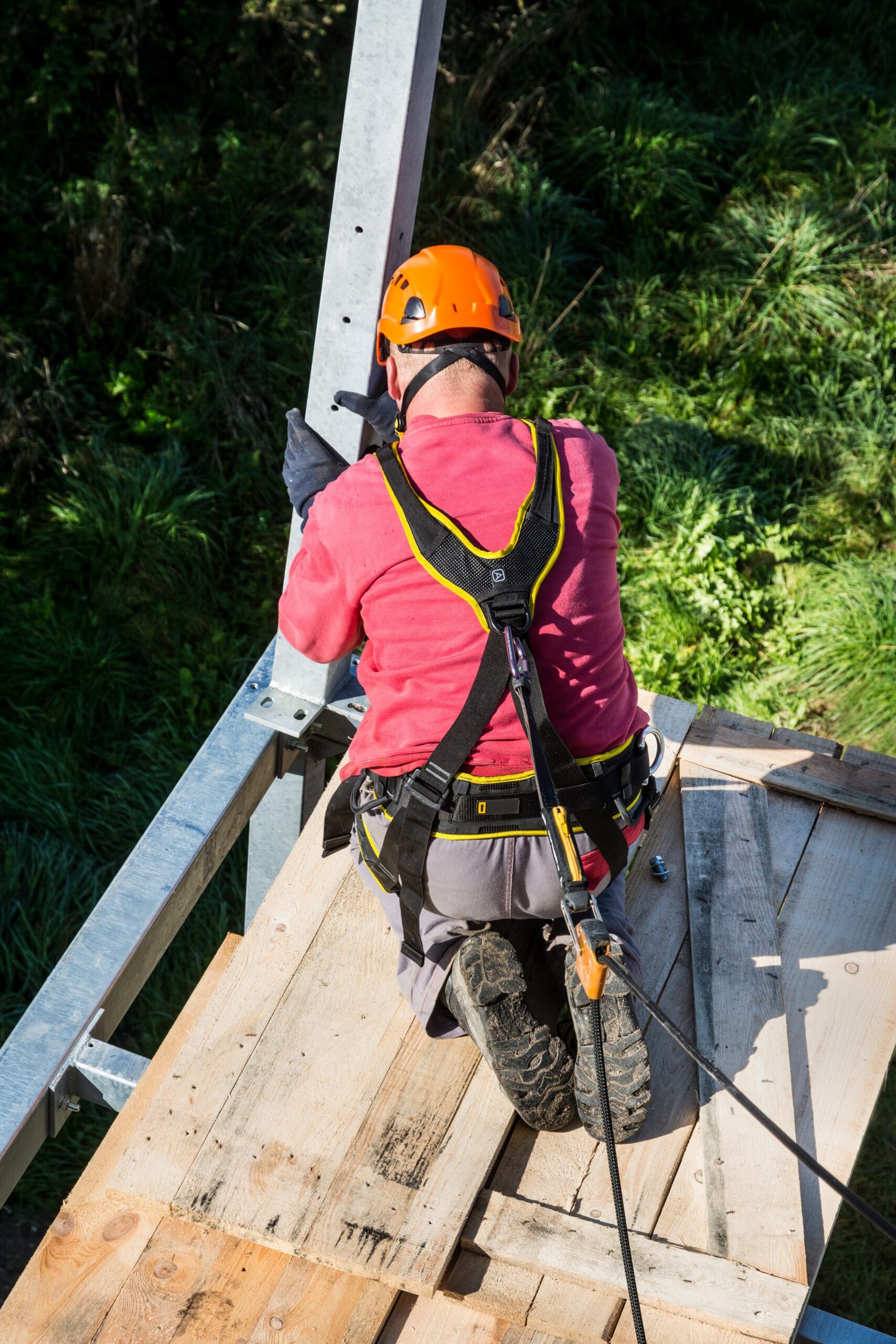
Two Victorian building companies have been charged by WorkSafe Victoria after a worker was seriously injured falling from a third-floor balcony at a Caulfield South construction site in July 2024.
REQ Construction Pty Ltd and MAD Group Construction Pty Ltd each face a charge under section 21(1) of the Occupational Health and Safety Act for failing to provide and maintain a safe working environment.
The incident
The 39-year-old worker was installing the ceiling of a third-floor balcony when he fell from the ladder he was working on to another balcony below, sustaining serious injuries.
The allegations
WorkSafe alleges that both companies breached regulation 44(2) of the Occupational Health and Safety Regulations by failing to ensure a passive fall prevention device — such as a mobile scaffold — was used to perform the work at height.
It is additionally alleged that REQ Construction failed to ensure such a passive fall prevention device was even available for use on site.
The matters were listed for a filing hearing at Melbourne Magistrates’ Court on 4 June 2026.
Ladders are not a fall prevention system
The charges reinforce a principle that WorkSafe Victoria and Safe Work Australia have consistently communicated: ladders are a last resort for work at height, not a primary control.
Under the hierarchy of controls for working at height, passive fall prevention systems — such as scaffolding, guardrails, and work platforms — must be considered and implemented before ladders are used. If a passive system can practicably be used, the use of a ladder without one is a breach of the regulations.
Construction employers and principal contractors must ensure that passive fall prevention controls are not only planned for but are physically available and used on site.