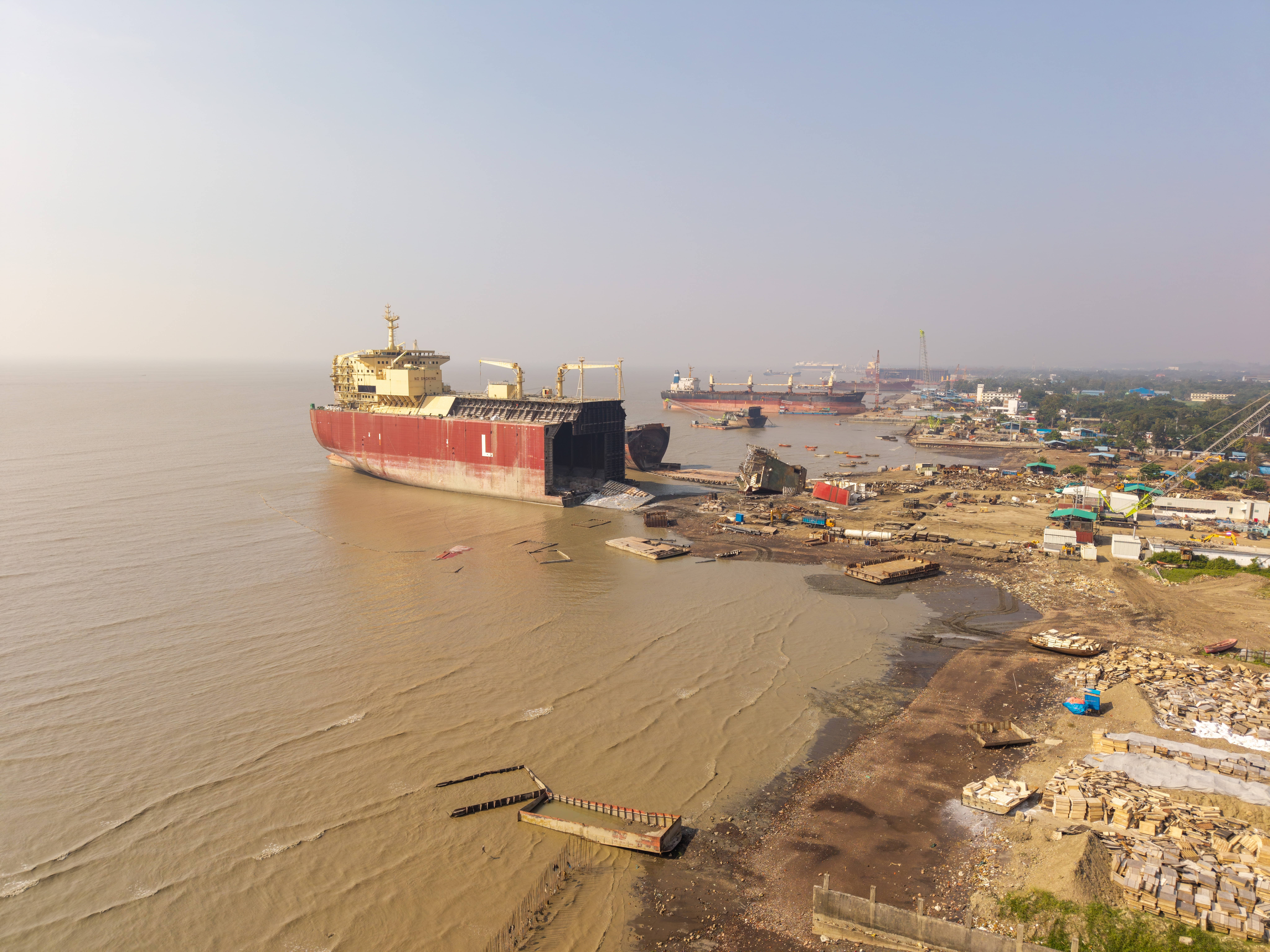
At least nine workers were killed and six others injured on 14 August 2026 when toxic gas leaked from a tank inside a liquefied natural gas tanker being dismantled at Ferdous Steel Ship Recycling Industries in Sitakunda, Chattogram — a yard that held certification as compliant with the Hong Kong International Convention for the Safe and Environmentally Sound Recycling of Ships.
The workers entered the LNG carrier MT Rasi at approximately 9:00am. The gas leak, encountered inside the vessel, proved fatal for nine of them. The victims included a 17-year-old. Their names, as reported by Bangladeshi media: Sani Das (35), Palash Das (39), Mansur Ahmed (55), Md Nasir Uddin (47), Rana Mia (27), Habibur Rahman, Khokon Mia (40), Abdul Alim Sujon, and Matiur Rahman Sazzad (17).
The tragedy adds fresh urgency to longstanding concerns about the safety and environmental standards of South Asian ship-breaking operations, where tens of thousands of workers — many of them in precarious, informal employment — dismantle vessels under conditions that safety advocates have described for decades as inadequate.
Ferdous Steel had been certified as compliant with the Hong Kong Convention, an international framework intended to ensure ship recycling facilities operate to minimum safety and environmental standards. The certification did not prevent the deaths. Only one month before the incident, Bangladesh’s Department of Inspection for Factories and Establishments had taken legal action against the same yard following repeated occupational safety failures.
Following the deaths, the Bangladesh Environmental Lawyers Association (BELA) issued a notice demanding an independent investigation and the immediate shutdown of the facility. As of the time of writing, the yard’s operating status is under review.
The case is a pointed reminder that certification and compliance paperwork are not substitutes for effective safety management — and that in high-hazard environments such as ship-breaking, the gap between documented compliance and the reality workers face on the ground can be, literally, fatal.