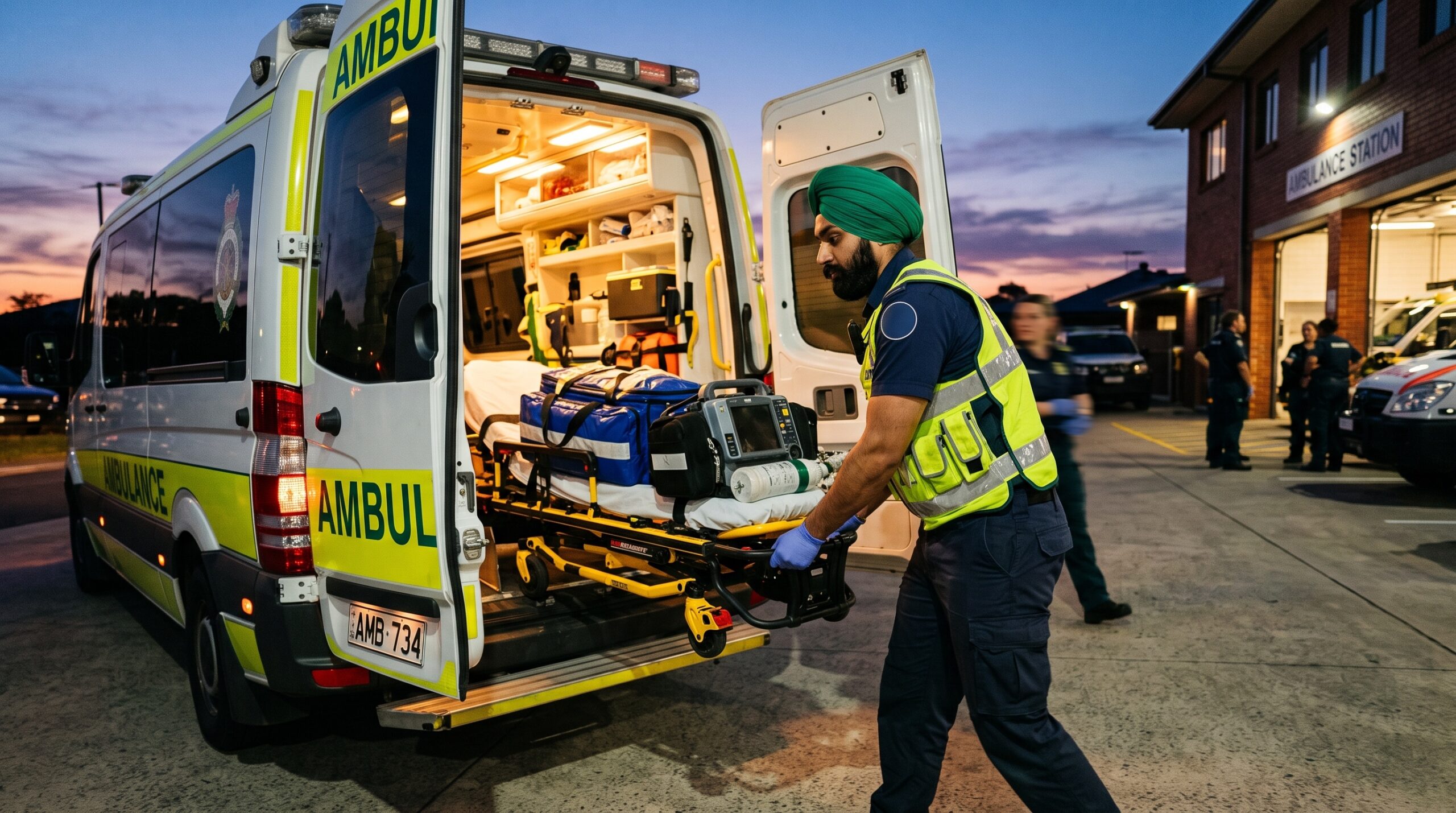
Alice Springs St John Ambulance paramedics have recorded their 100th workplace assault for 2026, with a crew attacked by a patient on 4 October while responding to a call — the latest incident in what has become an unrelenting pattern of violence against a workforce of just 45 people.
The milestone was documented by the ABC, which rode along with crews to capture the reality of frontline emergency work in the Territory. A patient attacked paramedics during the call, punching and spitting at them before police were called — one of 43 occasions in 2026 alone where law enforcement has been required to assist St John crews in Alice Springs.
The numbers are stark. One hundred assaults spread across three 24-hour crews means that almost every person on the team has been attacked this year. The rate of violence is markedly higher than in previous years, and the physical and psychological toll on paramedics is compounding.
Perhaps no case illustrates that toll better than Abbey Studley. In October 2024, Studley was attacked while on shift and suffered a traumatic brain injury — she now has permanent blindness in one eye and limited feeling in one arm. She has not returned to full duties. And despite the severity of the attack, no charges have ever been laid.
That outcome — a worker permanently disabled in the course of their duties, with no legal accountability — is exactly the kind of result the WHS framework is supposed to prevent. The Work Health and Safety (National Uniform Legislation) Act 2011 imposes a primary duty of care on PCBUs to ensure, so far as is reasonably practicable, the health and safety of workers. That duty expressly includes risks to psychological health, and occupational violence is a recognised category of WHS hazard that requires active management — not just incident recording.
The Northern Territory Government has indicated it is considering the introduction of body-worn cameras and OC spray for paramedics. Both have been used in other jurisdictions to reduce assault rates and improve evidentiary outcomes. But measures under consideration are not measures in place, and the gap between the two has real consequences.
For WHS professionals working in healthcare, emergency services or any environment where workers interact with members of the public — particularly in high-stress or high-vulnerability contexts — the Alice Springs situation is a confronting case study in what happens when occupational violence is treated as an inherent feature of the job rather than a manageable risk. It is not inherent. It is a hazard. And it requires the same systematic risk management as any other.