The rapid advancement of technology has transformed the workplace, making it possible for employees to remain connected around the clock. While this flexibility has its benefits, such as the ability to work remotely in many industries, it has generated a lot of discussion about employee wellbeing, burnout, and work-life balance write PATRICK WALSH, Partner, and BEN MARTIN, Lawyer, at Mills Oakley.
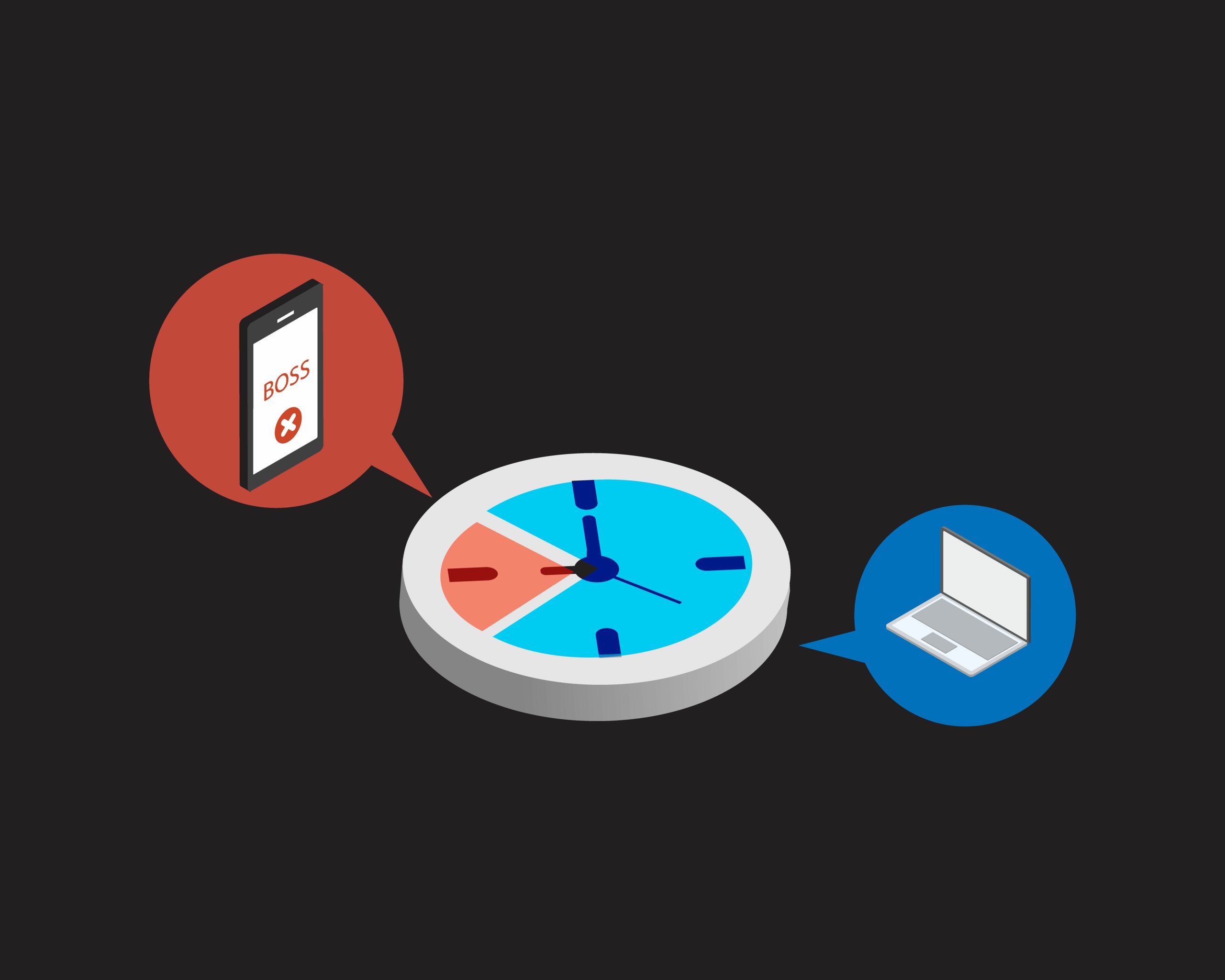
The right to disconnect refers to the ability of employees to disengage from work communications outside of designated work hours.
Along with the development and then widespread use of mobile phones, then internet — and then smartphones — it has become much easier for employers and employees to engage with each other outside of the traditional workplace.
During the COVID-19 pandemic, these technologies played a crucial role in keeping the world connected while adhering to social distancing guidelines. Programs such as Microsoft Outlook, Microsoft Teams, and Zoom enabled seamless communication between employers and employees. As restrictions eased and people regained their freedom, many had grown accustomed to working from home, with some even preferring it. According to the Australian Bureau of Statistics, approximately 41% of employed individuals regularly worked from home in August 2020, up from 31% the previous year.
Since then, while many have been required to return to the office, this shift hasn’t necessarily meant that employees have disconnected from work outside their scheduled hours, which in turn has been attributed to increased mental health problems, decreased productivity and general workplace dissatisfaction.
In the past we have seen countries like Portugal, Ireland, Italy, and France implement laws to allow workers to unplug from their jobs when they leave the workplace. In 2018, France’s Supreme Court ordered the British pest control and hygiene giant, Rentokil, to pay a former employee €60,000 (AU$99,100) for failing to respect their “right to disconnect” outside of the workplace. Additionally, we have also seen large companies such as Volkswagen and Daimler in Germany take steps to curtail out-of-hours messaging by blocking incoming emails to staff from the end of the business day until the next morning.
Legal framework
From 26 August 2024, non-small business employers must adhere to changes in the Fair Work Act 2009 (Cth) (FW Act) which were introduced to safeguard the right for employees to disconnect from their workplace where it is not unreasonable to do so. These new laws were designed to regulate and sets limits on communications between employers and employees out-of-hours. Similarly, in the case of small business employers, the same changes will apply from 26 August 2025.
These legislative amendments impose new employee rights in that they may refuse to monitor, read, or respond to work-related communications outside of their regular working hours, provided that their refusal is not deemed unreasonable. The assessment of whether an employee’s refusal is considered reasonable will be determined by a number of factors, including the nature of the contact, the level of disruption, the employee’s role and responsibilities, personal circumstances and any legal requirements for contact.
In the event of a dispute about the right to disconnect between and employer and employee, there is the right to make an application to the Fair Work Commission for an order pursuant to section 333P of the FW Act for any order that the Fair Work Commission considers appropriate, other than an order for payment of a pecuniary amount, to prevent the:
- employee continuing to refuse to monitor, read, or respond to contact or attempted contact (section 333P(2)(a));
- employer from taking action (section 333P(2)(b)); and
- employer to continue to require the employee to monitor, read, or respond to contact or attempted contact (section 333P(2)(c)).
It is expected that the right to connect jurisdiction will operate in a very similar way to which the anti-bullying jurisdiction.
Much like the anti-bullying jurisdiction, it is not anticipated that there will be a significant number of applications (in the 2023-24 financial year only 883 applications were made to the Fair Work Commission for an order to stop bullying) but that the existence of the jurisdiction will shape employer and employee behaviour.
Enterprise agreement and awards
These changes to the FW Act, have incidentally led to changes by the Fair Work Commission to all modern awards implementing a right to disconnect clause. It is reasonable to expect that unions representing members in enterprise agreement negotiations will consider seeking additional rights to supplement those already contained in the FW Act and any relevant modern award.
WHS laws
Given that the driving force behind these new rights is the concern for the wellbeing of employees, organisations should turn their mind to their work health and safety obligations when considering how to comply with their right to disconnect obligations.
Paragraph 3.1 of the Safe Work Australia model code of practice “Managing psychosocial hazards at work” lists “job demands” as the first common psychosocial hazard. Descriptors listed include:
- intense or sustained high mental, psychical or emotional effort required to do the job; and
- unreasonable or excessive time pressures or role overload.
Organisations should consider the implementation of the right to disconnect laws as an opportunity to introduce some frameworks (and potentially a policy) around contact with employees outside of an employee’s ordinary hours of work to ensure that communicating with employees outside of ordinary work hours does not place the organisation at risk of not only breach the right to disconnect laws but also being accused of unsafe work practices.
Recommendations
The right to disconnect laws have generated a lot of public discussion about the reasonable expectations of employers for employees to be contactable outside their ordinary hours of work. In considering how to respond to the new laws, employers should bear in mind that the focus of the new laws is not to prevent employers contacting their employees outside of ordinary work hours entirely, but rather to ensure any such contact is reasonable.
For smaller employers (noting the laws will not apply until 26 August 2025), it will be important to ensure that anytime an employee is contacted outside of ordinary work hours that the employer considers whether they can justify it as reasonable in the circumstances.
Larger employers may also wish to consider position descriptions for employees that make it clearer with regards to their expectations for the employee to be contactable outside of work hours. Consideration should also be given to implementing a workplace policy around the extent to which employees can be contacted outside of work hours and how this should occur as forming part of their suite of control measures for psychosocial safety in the workplace.