A national survey conducted by Hearing Australia has found that almost 25% of Australians know someone suffering workplace-related hearing damage, but only one in three consider protecting their own hearing. This is despite 11% experiencing damage from workplace noise themselves. This has prompted Hearing Australia to encourage everyone to prioritise their hearing health, at work and play.
Hearing Australia’s Principal Audiologist, Karen Hirschausen, said that more than one in five respondents have either experienced hearing damage from leisure activities or know someone who has. The survey also revealed that only one in four Australians think about hearing protection and use it at work or when undertaking noisy activities during their leisure time. Australian women appeared to think less about protecting their hearing than men, while millennials (people in their late 20s to early 40s) appear to be more concerned about their appearance than hearing, with one in four saying they’d be too embarrassed to wear earplugs or earmuffs in a loud environment like a concert.
“These statistics are a real concern. Hearing is such an important sense, but more than 1.1 million Australians are exposed to hazardous noise in their workplace. Noise-induced hearing loss is one of the most common occupational diseases, but it’s also one of the most preventable,” Hirschausen said.
In its ‘Making a noise about hearing’ report, the National Acoustic Laboratories (NAL), Hearing Australia’s research division, found high noise levels in workplaces are associated with stress, headaches, tinnitus, fatigue and increased absenteeism — and have the potential to cause increased heart rate, higher blood pressure and a greater risk of cardiovascular disease.
NAL also found that mitigating noise exposure is not a high priority for employers, employees or regulators, with small to medium-sized businesses appearing to be at greater risk of noise exposure.
“Safe Work Australia research found that within SMEs, there’s insufficient knowledge of the effects and the impact of loud noise on people’s hearing and quality of life. There also appears to be little consideration given to the benefits of noise control,” Hirschausen said.
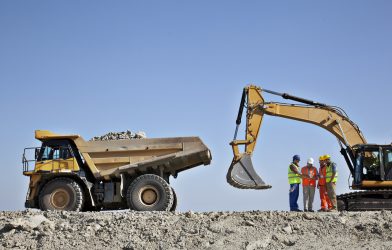
The man industries at risk of exceeding Australia’s noise exposure standard are mining, manufacturing, construction, farming and the Defence Force, according to NAL. “But there are other industries, such as hospitality, entertainment and retail, which are also exposed to loud noise,” Hirschausen said.
Hirschausen added that workplace laws that stipulate noise-exposed workers should have their hearing tested when they start work, and then at two-yearly intervals, should be reinforced.
“More broadly, we also encourage people to use smartphone noise apps to track their own noise exposure. These apps can be a powerful tool for behavioural change, as you receive real-time feedback if a noise is too loud, so you can adjust your behaviour or the noise. It’s likely to drive greater awareness of sound levels in general. If you’re in environments where you’re exposed to loud noise, you should have your hearing checked regularly. And if you have any concerns or experience changes in your hearing, you should also see an audiologist. Hearing Australia has expert audiologists available across the country providing care and support so people can experience better hearing health,” Hirschausen said.