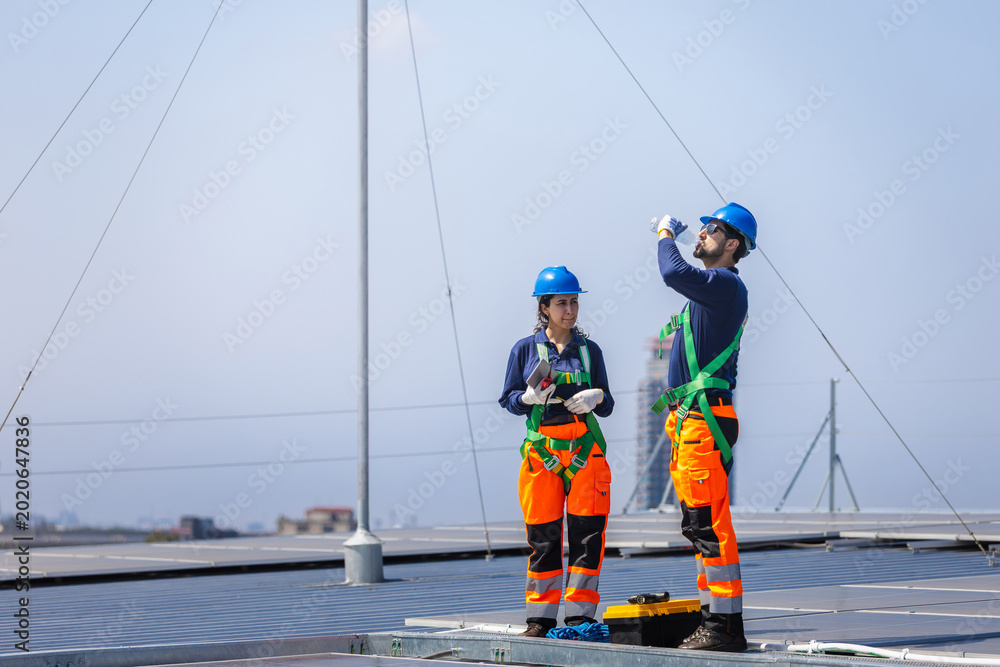
Advantage Electrical Group Pty Ltd has been convicted and fined $70,000 after a WorkSafe Victoria inspector observed two of its workers installing solar panels on the roof of a two-storey dwelling in Dandenong with nothing between them and a 5.79-metre fall.
No guard railing. No other fall protection. An unsecured ladder used to access the roof. No Safe Work Method Statement (SWMS) for high-risk construction work. The company was sentenced ex-parte at Dandenong Magistrates’ Court on 12 October 2026, after being found guilty of two charges of failing to provide a safe working environment.
The inspection occurred in February 2025. What WorkSafe also found was that Advantage’s director had been asked about the missing fall protection — and acknowledged he was aware it wasn’t in place.
This is not an isolated lapse. WorkSafe’s submission to the court noted that Advantage had previously failed to address fall-from-height risks and SWMS requirements at sites in Cheltenham (January 2025) and Clyde North (November 2021). The company had been given two improvement notices at the Dandenong inspection. It had encountered similar issues before. The director knew, and the work continued anyway.
The court convicted Advantage of $40,000 for failing to reduce the risk of falls from height, and $30,000 for failing to prepare an SWMS. Costs of $5,266 were also ordered.
WorkSafe Chief Health and Safety Officer Sam Jenkin said what the data continues to confirm: “Falls from height remain one of the biggest causes of death and serious injury in the Victorian construction industry, and failing to have appropriate fall protection measures in place is completely unacceptable.”
The solar installation industry sits at an intersection of two persistent risk environments: residential construction, where height controls are routinely underimplemented; and a rapidly growing energy sector, where demand for workers has outpaced safety culture on some sites. Two workers installing panels on a two-storey roof with nothing to stop them if they step wrong is not an edge case. It is, for some businesses, a normal Tuesday.
There is a legal standard for working at height. There is a practical standard. A SWMS is not optional for high-risk construction work. Guard railing is not a preference. These are the controls that have existed, in their current form, for years.