


Dr Tessa Bailey, Chief Executive Officer and Principal Psychologist, The OPUS Centre for Psychosocial Ris (She/Her)
Dr Tessa Bailey, a distinguished professional from the Opus Centre for Psychosocial Risk, brings a wealth of expertise in understanding and addressing the complex dynamics of mental health in high-pressure environments. With a deep commitment to fostering resilience and well-being, Bailey has been at the forefront of exploring how psychosocial risks impact individuals and organizations alike. Her work focuses on practical strategies to mitigate stress, prevent burnout, and cultivate healthier workplace cultures. Through research, training, and consultation, Bailey has been instrumental in shaping policies and practices that prioritize mental health alongside physical well-being. Her approach is rooted in evidence-based interventions, blending academic rigor with a compassionate understanding of human behavior. As the Opus Centre continues to lead the way in psychosocial risk management, Bailey’s insights and leadership remain integral to shaping the future of mental health support in professional settings.
The start of a new year is the perfect opportunity to reflect on how far we’ve come in Australian health and safety. Psychosocial risk management is one of those areas where we have made significant strides in our skills and capabilities of identification and management.
In recent years, Australia has made considerable progress in addressing psychosocial risks in the workplace. The introduction of specific requirements under the Work Health and Safety (WHS) Regulation 2017 marked a pivotal moment, mandating that businesses manage psychosocial risks with the same rigour as physical risks. This regulatory framework has driven organisations to adopt a more holistic approach to workplace safety, integrating mental health considerations into their overall risk management strategies. Having worked with many organisations to apply this new regulatory framework, I have been pleasantly surprised by the innovation and perseverance of health and safety practitioners in delivering a successful system for their workplaces.
Despite these advancements, the maturity of psychosocial risk management across Australian workplaces varies widely. Some organisations have embraced comprehensive risk assessment processes, regularly consulting with employees to identify and mitigate psychosocial hazards, while others are resisting the change, doing the bare minimum to tick the boxes and stave off regulator attention.
For those workplaces that have been proactive in psychosocial risk management, common themes have emerged that challenge their success and sometimes halt their progress. These issues are often specific to the context of each workplace, meaning there is no one-size-fits-all approach.
HR or WHS?
For smaller organisations where human resources (HR) and work health and safety (WHS) practitioners are in the same team, it is easier to clarify roles and responsibilities. However, in larger organisations where the teams are separate, it can be very difficult to agree on how to manage psychosocial risk collaboratively. One factor contributing to this issue is the often-competing interests of HR and WHS departments. HR’s focus on employee engagement surveys can sometimes clash with the need for more targeted, survey-based psychosocial risk assessments, leading to gaps in identifying and addressing potential hazards.
Another challenge is the sharing of data to more effectively identify and manage psychosocial risks. Hazard identification data can be useful for HR to understand the types of interventions (e.g., training and mental health supports) that should be developed. Equally, HR data such as complaints and grievances would be useful for WHS to identify risk areas and implement earlier interventions. Overcoming this requires a collaborative approach, where both HR and WHS work together to integrate psychosocial risk management practices into existing systems and processes.
Higher Psychological Demands
Workers from all industries are reporting higher levels of cognitive and emotional demands as part of their work. External factors such as the cost of living crisis, long-term impacts of COVID-19, and political changes impact individuals’ emotional resources. Additionally, there have been changes in the types of demands involved with the work we do. Thanks to the advent of computing, robotics, and AI, the nature of work is shifting from routine manual tasks (e.g., manufacturing, data entry, photocopying) to more complex, non-routine tasks (e.g., change management, stakeholder engagement, reporting, project management).
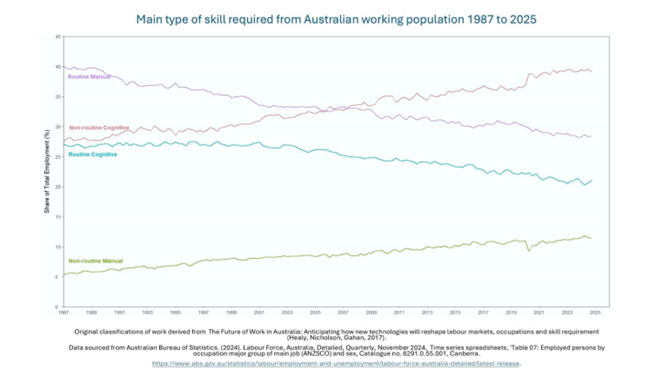
As automation increases, the remaining tasks often become more cognitively complex and emotionally demanding, placing additional stress on workers’ psychological resources. This shift necessitates a greater focus on understanding work-related cognitive and emotional demands, designing roles to balance these demands, and providing workers with sufficient recovery and support mechanisms to help them manage these heightened psychological demands effectively.
Notification Fatigue
Involving workers in the management of psychosocial hazards in an already busy and notification-fatigued workforce is a significant challenge. The number of work and personal notifications (calls, texts, chats, emails, reminders) continues to increase, requiring extra effort to grab someone’s attention. Leaders and employees are often overwhelmed with tasks, working groups, and information, making it difficult to allocate time for psychosocial risks – which is a psychosocial risk in itself. Innovative approaches, such as integrating psychosocial safety education into existing forums and using engaging, bite-sized content, have been helpful in overcoming this challenge.
Leading Indicators
There is a lack of understanding about leading indicators for psychosocial risk and their importance in guiding corrective actions. Unlike lag indicators, which reflect past incidents, lead indicators like Senior Management Commitment, Worker Participation, and Organisational Trust can provide early warnings of potential issues, allowing time to implement initiatives before employee health is impacted.
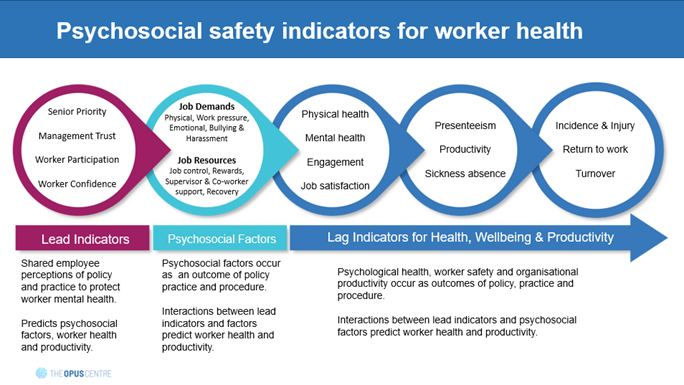
A good example is the psychosocial hazard of poor change management. While it’s good to identify poor change management as an issue, understanding what specifically causes stress related to change is crucial. Is there insufficient communication across the workforce? Is there poor participation/consultation in the changes being made? Are there adequate resources to support staff during the change period? Is there recovery in-between change periods? Are leaders equipped to take action when a concern is raised? Attending to these lead indicators proactively will ensure a more successful change process. Educating organisations on the value of lead indicators and how to effectively monitor and respond to them is crucial for proactive risk management.
What Can Workplaces Do?
Some proactive measures that have succeeded include senior leaders visibly championing the wellbeing of their employees, improving communication about psychosocial hazards specific to the workplace, creating a shared understanding of how to best manage cognitive and emotional demands, proactively scheduling breaks throughout a work period to promote recover, and fostering a positive organisational culture where employees can speak openly about the challenges they might be facing. Such practices not only enhance employee well-being but also contribute to higher levels of engagement and productivity.
While Australia has made commendable progress in managing psychosocial risks, there is still room for improvement. By fostering collaboration between HR and WHS, leveraging evidence based best practices to reduce psychological risk, and meaningful engagement with employees, Australian workplaces can achieve a higher maturity level in psychosocial hazard management. This will not only protect employees’ mental health but also create more resilient and productive organisations.


